Modern digital media buying has taken over with the support of programmatic advertising. Rather than using manual negotiations or predetermined placements, programmatic uses automated technology and real-time information in determining who to serve which ads, how much to pay, and whom to serve. All these are achieved within milliseconds. We can also see how much it has transformed the world of advertising with programmatic constituting over 80 percent of the digital display advertising spend in the world. It unites accuracy, scale and competence. There is the ability to target audiences, optimize real time budgets, and performance can be tracked clearly by the brands, and more out of the inventory can be achieved by the publishers. The interpretation of programmatic works has become the key of any marketer willing to succeed in an information-driven world.
What is Programmatic Advertising?
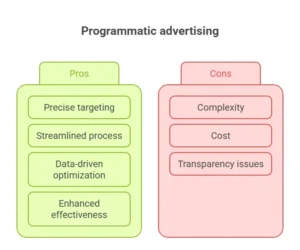
Programmatic Advertising is an automated process whereby digital ad space is purchased without the need to refer to the classic, manual process of negotiations. Rather than organizing placements by having to go through extensive communication loops, algorithms and data-driven systems handle the process dynamically.
Every advertisement is placed in the context of the high chances that a specific user will be interested in it. The system analyzes audience behavior, demographics, interests and browsing habits and decides within milliseconds whether an impression is worth bidding. Human control is required despite the high level of technology development: marketers determine the targets, budgets, and creative direction, and automation is required so that the delivery will be based on the goals.
Understanding the Process Behind the Technology
To determine the transformative nature of Programmatic Advertising, it is useful to see the complex processes that take place behind the scenes. A real-time auction occurs whenever a user is loading a webpage. Many advertisers are competing to get a chance to show their message to that particular user at that very instant. The ultimate bidder is the one who gets placed, and the whole business is completed within the blink of an eye..
This is an advanced form of demographic targeting. It includes specific information like buying intent, the latest search, device type and behavior patterns. Accordingly, the advertisements that users are presented with tend to be seemingly congruent with their needs or interests or previous online behavior, and this is why some advertisements are particularly overwhelmingly relevant.
Why Modern Marketers Prioritize This Approach
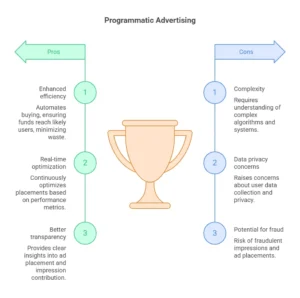
The enhanced efficiency of digital campaigns may be considered one of the key benefits of Programmatic Advertising. Conventional purchasing processes are usually associated with a lot of guesswork and incomplete information. Conversely, automated buying is useful in ensuring that the advertisement funds go to the most likely users. This would go a long way in minimizing wasteful expenditure and improving the overall results of the campaigns.
Real-time optimization is another major advantage. Marketers will not have to wait till the issuance of a report monthly or quarterly before making any adjustments. The system keeps on optimising placements depending on performance metrics, whereby the budget is redirected into better-performing channels or audiences accordingly. Better transparency also enables the advertisers to know where their advertisements are best placed and the contribution of each impression to the campaign objectives.
Addressing Common Misconceptions
Programmatic Advertising has many misunderstandings, although it has been widely adopted. There is an assumption that it can only be applied to big organizations with huge budgets, but technology is very scalable and can be used by organizations of all sizes. The rest believe that automation suppresses creativity, yet it is the opposite. Automation provides logistics in terms of placement, which can enable marketers to spend more time on strategic thinking and powerful content creation.
Issues of brand safety remain. The suspicious placements were legitimate in the initial days of automated purchasing. Nevertheless, recent technologies offer a great number of options to filter unwanted categories, use strict filters, and trust certified lists of publishers. This has led to secure and reliable placements like never before.
The Future Direction of This Approach
With consumers still moving through platforms and devices, Programmatic Advertising is entering into new digital spaces. There is now automated buying on the connected television, audio streaming, digital out-of-home screens and so on. The future is even more personalized, more interconnected across channels, and more intelligent with the help of artificial intelligence and machine learning.
The system will progressively promote a holistic approach to audience engagement, as opposed to merely delivering advertisements, to help brands create continuity and consistency in the communication channel they use with their audiences at various points of touch.

How HT One Helps With Programmatic Advertising
HT One Audience strengthens programmatic advertising by giving brands the ability to target, optimise, and measure with far more accuracy and scale than standard media buying.
- Rich audience targeting
HT One Audience provides access to large, well-defined audience cohorts such as tech enthusiasts, FMCG shoppers, business professionals, luxury buyers, and many more. These cohorts can be activated directly in your programmatic campaigns, ensuring that your ads reach people who are actually relevant instead of broad, unfocused audiences. - Strong first-party data foundation
Because HT One is built on first-party data, it helps brands navigate a world where third-party cookies are disappearing. You get accurate, privacy-safe targeting based on real user behavior across the HT Media network, which makes your programmatic campaigns more reliable and future-ready. - Full-funnel programmatic inventory
HT Media supports programmatic buying across multiple formats, including display, native, audio, and even podcasts. This means you can run brand awareness, engagement, and conversion campaigns all within the same ecosystem. HT Media’s in-house technology also allows for personalised delivery and better optimisation. - Clear measurement and optimisation
By using cohort-based targeting, you can track how your chosen audience interacts with your ads. This helps you understand what works at different stages of the funnel, whether that is awareness, consideration, or conversion. With consistent feedback, you can optimise in real time and improve overall ROI. - Practical use for your campaigns
You can define your cohort, activate it through programmatic channels, choose the formats you want, track performance across the funnel, and then optimise based on real behaviour. This gives you a structured, data-led approach to programmatic buying rather than relying on guesswork.
Conclusion
Programmatic advertising has become a central part of modern marketing because it brings together automation, data and real-time decision making. It allows brands to reach the right audience at the right moment with far greater accuracy than traditional buying methods, and it creates a more efficient path from impression to outcome. When powered by strong first-party data and supported by quality inventory, programmatic becomes even more effective. It delivers transparency, measurable results and the flexibility to adapt as consumer behavior changes.
For marketers who want to stay competitive, understanding and embracing programmatic is no longer optional. It is a core capability that shapes how campaigns are planned, executed and optimised. Whether your goal is brand awareness, engagement or conversions, programmatic provides the tools to deliver smarter, faster and more impactful advertising.
Frequently Asked Questions
What exactly is programmatic advertising?
Programmatic advertising refers to the mechanized aspect of purchasing and selling digital advert space through software, data and algorithm rather than through negotiations. It employs real-time bidding, targeting of the audience to show ads to the right user at the right moment on websites, mobile apps, and streaming platforms among others. Such automation expedites, makes advertising more efficient and precise as compared to buying ads in the old fashioned way.
What is the difference between digital marketing and programmatic advertising?
Digital marketing is a very general area encompassing all online marketing activities such as social media, SEO, email, and search ads whereas programmatic advertising is a subset of digital marketing that involves automatic purchasing and optimization of the digital advertisement space based on data and algorithms.
Who offers programmatic advertising?
Large Demand-side Platforms (DSPs) like Google Display and Video 360 (DV360), The Trade Desk, Amazon DSP, Adobe Advertising Cloud, Xandr, MediaMath, StackAdapt, Basis Technologies and Quantcast also provide programmatic advertising. It is also sold on certain ad networks (such as Google Ads and Yahoo), along with media agencies and dedicated, programmatic advertising agencies that run campaigns on behalf of their clients.
What are the key benefits of using automation for ad purchases?
The main benefits are that it has better targeting accuracy, cost-efficiency, real-time optimization, better transparency, and a broad spectrum of ad inventories on many channels and devices.
Is automated ad buying suitable for small and medium-sized businesses?
Yes. Though it has been associated with large brands, the approach can be scaled very easily and modified to smaller budgets. A high level of targeting ensures that any business can target the right people without it going to waste.
Ready to take your brand to the next level? Connect with us today to explore how HT Media can amplify your presence across our diverse portfolio of 25+ brands and properties. Let's turn your brand vision into reality!






Comment