Struggling to keep your marketing cohesive across print and digital? You’re not alone. Most businesses end up with campaigns that feel disjointed, costing them both impact and revenue. But when you blend the trust of offline media with the precision of digital tools, everything changes.
If you’re a CMO, it is not merely a matter of incorporating both print and digital whereby campaigns are to be run in both channels, but rather the development of a single brand experience that extends customers on the ladder of awareness to action. Print is still an important element of credibility and brand recognition, though its full potential is to be realized when it is strategically linked to the digital touchpoints.
Why shift from just print to a hybrid Advertising strategy?
Many brands still treat print and digital as separate channels, but the most effective campaigns connect the two. Print delivers credibility, depth, and the trust that comes from established audiences. Digital advertising provides speed, real-time measurement, and interactivity. When these channels work together, you get the reach and authority of newspapers or magazines combined with the precision and engagement of web and mobile. The result is a more cohesive and mutually reinforcing media strategy rather than disconnected efforts. As you shape your paid-media overlay, which is essentially your broader online advertising strategy, the objective is not to replace print with digital but to integrate them for greater impact.
How to integrate print with your digital efforts
Integrating print and digital does not involve the consideration of print and digital as two isolated channels. It is all about developing one system whereby all the media complement one another. This is a bare bones, non-technical model that should assist your team to connect your offline media to your online and promotional actions in a manner that makes sense and is quantifiable.
1. Define a Unified Goal
Begin by defining one common goal between the print and digital one: brand awareness, lead generation or product launch. Do not consider print to be old and digital to be new media. Rather, consider them as separate experiences in the same customer experience.
Example: When you want to advertise a new product, print will create general awareness and digital will reach interested users and develop them on the funnel.
2. Maintain Consistent Messaging and Branding
Make sure that you have an equal visual presence, tone of voice, headline and CTA on both channels. It should not make the customer feel that he has entered a new world when he goes out of print and into digital.
Examples: Your print advert may contain a QR code that will direct to a product microsite. The digital display banners that users are presented to later on should reflect similar tagline and image as the print ad, which contributes to remembering.
3. Use Print to Build Trust and Digital to Deepen Engagement
Print puts down credibility and reaches an audience that responds to traditional media. Online on the other hand, the targeting is done precisely, it is interactive and has conversion tactics.
Idea: A full-page print advertisement will present your new service and direct readers to a microsite. Visitors visiting the microsite are subsequently retargeted on online adverts with benefits, price, or time-sensitive deals.
4. Leverage Audience Data Across Channels
To make the most out of it use audience data both online and offline. This is useful in ensuring that you always reach the same high-value segments with your message.
Example: In the case of targeting a group of Tech Enthusiasts online using display and native advertising, you will also be able to target the same group with print placements in certain publications. The repetition- online and offline enhances memory and effectiveness.
5. Amplify Content Through Syndication
It is not enough to use ads only in your campaign. Increased reach and storytelling articles, explainer videos, product spotlights are examples of branded content that can uplift your story.
Representation:You make a branded article with the stories of customer success. It is published in partner sites by content syndication. In your print advert, you refer them to that same story to the use of QR code. Then digital retargeting follows the path with the less lengthy social cutdowns or follow-up materials.
6. Coordinate Timing and Measure Holistically
Arrange your print drops and digital activations in such a way that they complement each other. then measure them separately and in combination to know their effect combined.
The print advertisements were placed in houses on Monday. Tuesday increases your digital campaign with retargeting and social support.
Measure:
- Print: readership, circulation, estimated reach
- Digital: clicks, impressions, conversions
- Combined: lift in website visits during the print window, conversion quality of audiences exposed to both
This helps you attribute print’s role (awareness and site visits) and digital’s role (engagement and conversions).
7. Optimize and Iterate
Integrated campaigns give you more complete insights. Use these insights to refine your next cross-channel plan.
If you discover that readers from certain markets respond strongly to print and then convert online, allocate more print budget to those regions. If digital retargeting from print visitors performs exceptionally well, scale that portion in the next cycle.
Challenges you might face and how to beat them
In the process of merging print and digital, there are numerous pitfalls that one is likely to encounter, and they all have an obvious answer to them. Channel silos that result in print and digital teams being autonomous and pursuing distinct objectives is one of the key obstacles. To overcome this, one can allocate one campaign owner and develop one measurement plan that will be inclusive of both channels. The other problem is the discrepancy in the performance indicators. Print is dependent on circulation and readership whereas digital is dependent on clicks and conversions. This may be resolved by establishing common KPIs, which comprise quantifying site visits which emerge out of print and monitoring conversions through digital, and subsequently drawing together all of this data into the same dashboard. Visual inconsistency may also arise particularly where creative that works effectively in the print media fails to be easily converted into the digital medium. This can be alleviated by a central brand kit and prudent adaptation of assets and a creative studio such as the HT Brand Studio can be of help in ensuring a seamless translation process across formats. Lastly, when there is no channel alignment in targeting, there is sometimes loss of touch by the brands with their audience. Organizing targeting using the cohort-based applications like HT One Audience will assist in making sure the same surface is covered both online and offline, which will form a cohesive and united experience.
How HT Media and Hindustan Times Ecosystem can Help
If you’re exploring a partner to help with your integrated mix, we offer quite a few interesting pieces. Here are the services we provide:
Print, Digital, and Radio formats
One of their core strengths is offering multi-platform reach. On their “Advertisers” page they say they provide print, digital and radio ad formats in one ecosystem.
So if you run a campaign, you might place ads in a flagship newspaper, push digital banners or native content, and also reach via radio or podcasts.
Audience data & targeting
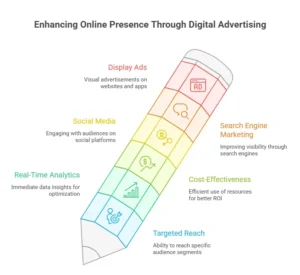
If you are looking for a partner to support your integrated media strategy, we offer a wide range of capabilities designed to help you connect print, digital, and audio in one cohesive ecosystem. Here is how we can support you:
Print, digital, and radio formats
One of our core strengths is our ability to deliver multi-platform reach from a single ecosystem. Through our offerings, we provide print, digital, and radio ad formats together. This allows you to run a campaign that appears in our flagship newspapers, extends into digital banners or native content, and reaches audiences through radio or podcasts.
Audience data and targeting
We offer HT One Audience, our first-party data solution that lets you target cohort-based audience segments such as tech users, FMCG shoppers, or fashion buyers. With this solution, you are not simply buying media placements. You are reaching well-defined audience groups through data-driven targeting across our entire platform network.
Syndication and branded content
Through HT Syndication, we provide both content creation and large-scale distribution across a wide publisher network. This includes articles, videos, infographics, and social content. This approach gives you more than standard ad placements. It allows you to tell a compelling story that connects beautifully with both print and digital audiences.
Brand studio and creative innovation
Our Brand Studio helps bring your brand story to life across multiple formats. We focus on transforming stories, not just telling them. If you need to move a creative idea from print into digital, we can help adapt it into print spreads, enriched digital formats, video content, or podcasts, ensuring consistency across every touchpoint.
Practical example: Walking Through a Campaign
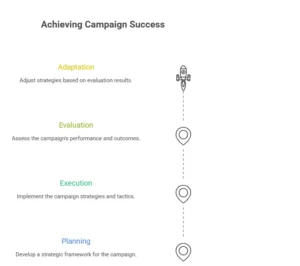
Let’s say you’re launching a new tech gadget in cities across India. Here’s how an integrated approach might look:
- Print: Run a full-page ad in the flagship newspaper of HT Media, introducing the gadget headline, visuals, and QR code link.
- Digital: Immediately after the print runs, the launch displays banners and native content targeting the “HT One Gadgets” cohort, driving users to a landing page. Retarget those who visit but don’t convert.
- Syndication: Use HT Syndication to distribute branded articles about “how this gadget simplifies your life,” across partner sites, with links to your landing page.
- Radio: Use their audio platforms to run a short script referencing the print ad (e.g., “As seen this morning in the paper…”).
- Measurement: Track how many people scanned the QR from the print ad → converted; how many visited from the display; which audience cohort had the best conversion; which market performed best.
- Optimization: In case a print ad in one city brought about more digital conversions, then repeat that geography in the future, cut the budget in those areas that are not performing.
- Follow-up: You should only use email or SMS when you are engaged and feed them into retargeting advertisements.
Why this kind of hybrid approach wins
A print and digital hybrid approach is effective in that it combines the powers of the two to effect. Print enables you to access large, reputed readerships as well as provides your campaign with the benefit of credibility. Digital is more precise, as it allows reaching specific groups of people more precisely and in real-time. These two elements can be reinforced to support your message. The familiarity and the trust that comes with a printed campaign makes the online follow-up more relevant and more compelling.
This is a combined method that also provides better measurement. You do not have to make assumptions on the performance of print but can tie print exposure with online activity like site visits and conversions. With audience cohorts and shared data, you will be able to see how people cross channels and what the comprehensive impact of the campaign is. This results in greater efficiency of the spending, and can usually yield a better boost of the investment than either of the two channels themselves. It also enables you to be prepared for the future. You are still developing robust online capacities and you have the advantage of the years of brand reputation and readership with print.
Final thoughts
A combination of offline and online action can seem complicated but it is easy when you are aligned on a common goal, a steady frequency of communication, intelligent targeting and a joint form of measurement. It is even easier with the right partner. The HT Media, we unite the print, digital, radio, events and creative services within one ecosystem, which makes it easy to engage in a full cross channel campaign.
In case you want to go beyond the mere placements of the advertisements and build a related campaign in print and online, the given approach will enable you to achieve much better outcomes. We have the tools of data-driven targeting, access to your audiences, and the capacity to be creative to assist you in the process of uniting a campaign that works at each touchpoint.
Ready to take your brand to the next level? Connect with us today to explore how HT Media can amplify your presence across our diverse portfolio of 25+ brands and properties. Let's turn your brand vision into reality!


Comment