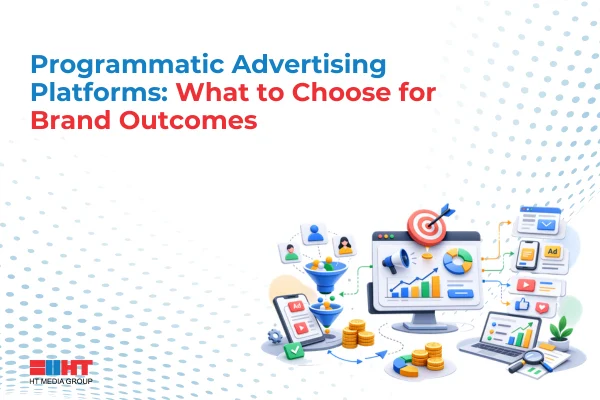
When discussing programmatic advertising platforms, we refer to digital tools that automate the process of buying, placing and optimising ads in real-time. Instead of manually negotiating with the publishers, advertisers can take advantage of these platforms to reach the right audience at the right time with minimal human intervention.
These media are important since the online world is shifting at a rapid pace. The audience is changing, the channels are increasing (mobile apps, video, display, social), and manual media buying simply can’t keep up. Programmatic advertising platforms streamline the process, making it more efficient, data-driven, and scalable.
How Programmatic Advertising Platforms Work
To understand how programmatic advertising platforms operate, here are the key steps simplified:
- Audience data & targeting
The system initially collects information regarding user behaviour, what they search for, browse, and click. A programmatic advertising platform uses this information to create segments of the audience (such as people interested in fitness or young car buyers).
- Ad inventory & bidding
Then, a user opens a web page or an application and ad space is offered. The programmatic advertising platform takes part in an auction (in most instances, within milliseconds) to win that space.
- Real-time decisioning
Since this is so rapid, the programmatic advertising platform must make a decision: should it display your ad to the user based on their profile, the context (which website/app) and the price? In the case of yes, it is served immediately.
- Ad delivery & optimisation
After the ad is served, the platform monitors the performance of the ad: clicks, conversions, viewability, etc. It then uses this feedback in improving performance by shifting budget to better-performing segments or channels.
- Reporting & insights
Lastly, the programmatic ad system provides you with reporting: the number of people who were exposed to the advert, which segments performed the most, and which websites/apps are giving returns. This assists in the fine-tuning of your strategy on the next run.
How Programmatic Advertising Platforms Help: Real Benefits
The following are the actual advantages of utilising programmatic advertising platforms:
- With the data platform, you can target people who are more likely to be interested, rather than throwing a net.
- Efficiency and speed: Auctions occur in milliseconds; media buying becomes automated, and manual work and delays are reduced.
- Economic viability: You align yourself with audiences and placements which count. Real-time optimization helps you to reduce wasted expenditure.
- Scalability: Programmatic platforms enable you to scale across channels, whether you are running a local or nationwide campaign.
- Greater insight and optimisation: You receive detailed performance data and can fine-tune campaigns as they run, resulting in smarter outcomes.
- Cross-channel reach: Most programmatic ad platforms include display, video, mobile, and even audio/OTT – reaching out to users anywhere they go.
How Programmatic Advertising Platforms Work in Practice: Example Flow
The following is a simple illustration of a campaign that would execute on a programmatic advertisement system:
- You decide you need to target women aged 25-35 who are interested in skincare and reside in Delhi.
- You enter this into your programmatic advertising platform, set a budget and goal(e.g. visit to the site or purchase).
- The platform analyses data to determine the relevant users on the websites/apps that are part of its network.
- Whenever such a user taps an app or opens a site, the platform evaluates your ad opportunity, bids if it meets your targeting criteria, and sends your ad.
- It tracks the number of users who convert, the cost per result, etc
- Depending on performance, it redirects budget to the highest-performing sites/apps, narrows targeting, and possibly halts poor-performing placements.
- Finally, you have a dashboard showing the total dollars spent, the number of conversions, the best sites, and the types of audiences that responded.
This is how the programmatic advertising platforms transform data + automation into actual marketing outcomes.
How Programmatic Advertising Platforms Help Brands Grow
Brands that use programmatic advertising platforms effectively can see growth in meaningful ways:
- Better ROI: Because you reach relevant users and optimise live, the return on ad spend improves.
- Faster learning: The more you run campaigns, the more data you collect, the better the platform learns your best audience – so future campaigns get smarter.
- Broader reach: With one platform, you can manage many channels, so you’re not restricted to just one network.
- Consistent messaging: You can use the platform to deliver consistent branding and messaging across devices and channels, helping build a stronger brand.
- Agility: If a campaign isn’t working, you can pivot quickly–change creative, adjust audience, shift budget. That’s much harder with traditional media buying.
How Programmatic Advertising Platforms Can Be Used by Different Business Types
Different business types can make use of programmatic advertising platforms in ways tailored to their needs:
- Small businesses might use it to reach local audiences with limited budgets and optimise for store visits or local conversions.
- E-commerce businesses can use it to retarget users who have visited their site but didn’t buy, boosting conversions.
- Large brands can use it for national-scale campaigns, multiple segments, brand awareness, plus performance under one roof.
- Agencies can manage multiple campaigns for clients using a single platform, gaining efficiencies and data insights across clients.
- Publishers & media owners can also partner with platforms (or offer their inventory) so advertisers gain access, and monetisation is improved.
How Programmatic Advertising Platforms Work with First-Party Data & Publisher Environments
An advanced benefit of programmatic advertising platforms is using first-party data and brand-safe environments. For example, a media publisher might have trusted content, verified audience segments, and a safe context. The platform can integrate that data to offer better targeting and more reliable placements.
This gives advertisers added confidence: fewer risks of misplaced ads, brand safety is stronger, and the audience is more likely to be relevant.
How HT Media Helps With Programmatic Advertising Platforms
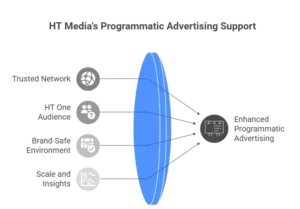
Now let’s look at how HT Media supports brands using programmatic advertising platforms:
- HT Media provides a large and trusted network of digital, print and radio brands, with reach into millions of users through verified content.
- We offer HT One Audience, a first-party data solution that gives unified customer cohorts built from rich customer profiles across 20+ platforms and multiple genres: BFSI, FMCG, Auto, IT, Food & Lifestyle, etc.
- With such audience cohorts, a brand can plug into programmatic advertising platforms but use the data inputs provided by HT Media to better target, reduce waste and improve ROI.
- HT Media emphasises “advertise in a brand-safe environment” – meaning when you use the HT Media ecosystem via programmatic advertising platforms, you get safer, premium placements.
- We have the scale (200 M+ audiences across 12+ genres) and insights to support large-scale campaigns via programmatic advertising platforms.
- In short: brands working with HT Media can combine the power of programmatic advertising platforms plus high-quality data + trusted environments via HT Media’s network.
Common Pitfalls When Using Programmatic Advertising Platforms (and How to Avoid Them)
Even though programmatic advertising platforms bring many benefits, there are some pitfalls – and knowing them helps you avoid costly mistakes:
- Bad data or poor audience segments: If your targeting is off or your data is weak, you may show ads to irrelevant users. Solution: Use high-quality first-party data and test your segments.
- Brand safety issues / low-quality placements: Ads might appear next to unreliable content. Solution: Use trusted publisher networks (like HT Media) and ensure the platform has good controls.
- Lack of optimisation: If you set a campaign and never check or adjust, you lose performance. Solution: Monitor regularly, shift budget, test creatives.
- Over-reliance on one channel: Some think programmatic = only display ads. But you can (and should) span channels. Solution: Use omnichannel placements (mobile, video, display).
Not aligning with the overall marketing goal: Running programmatic ads in isolation may not bring full value. Solution: Align with your broader marketing strategy, track correct KPIs (not just clicks).

Steps to Get Started with Programmatic Advertising Platforms
Here’s a simple roadmap for starting with programmatic advertising platforms:
- Define your goal (brand awareness, lead generation, sales) and target audience.
- Choose a platform (or partner) that supports your channels and budget.
- Collect or use quality data: your own first-party data, audience cohorts, etc.
- Set up your campaign: audience segments, creatives, bid strategy, and budget.
- Monitor performance daily or weekly CPM (cost per thousand impressions), CPC (cost per click), CPA (cost per acquisition).
- Optimise: pause underperforming segments, increase budget for what works, test new creatives.
- Report & scale: once you have repeatable performance, scale up and expand channels.
Conclusion
Programmatic advertising platforms provide an effective solution in the digital era where the world is in a rush, and any brand would prefer to be in the right place, right time, and right people. These platforms can assist you in saving more time and getting better ROI and scale your campaigns by using automation, data, and real-time bidding. And combine these platforms with known networks, quality audience data like those provided by HT Media and you gain the combined advantages of accuracy, brand safety, and reach. When you are willing to go the next notch with your advertising, consider the role that HT Media could play in the process with the help of programmatic advertising platforms.
Frequently Asked Questions
What exactly is a programmatic advertising platform?
A programmatic advertising platform refers to an online platform that applies real-time buying, selling, and optimization of advertisements. It does not operate on a manual negotiation basis, but rather uses data and algorithms to determine the ads to display, to whom and at what price.
How does programmatic advertising decide which users see an ad?
The platform uses audience data, including browsing behaviour, interests, and demographics, to form segments. When an interested user enters a site or an application, the system immediately evaluates the chance and bids to display the advertisement provided that the user fits your targeting profile.
Why is programmatic advertising more efficient than traditional buying?
Programmatic advertising is automated from bidding to targeting to optimisation. The auction process takes milliseconds and minimises the amount of work done manually, and your auctions are displayed to the most relevant audience. This results in improved performance, reduced spend wastage, and quick campaign optimisation.
Can small businesses benefit from programmatic advertising?
Yes. Programmatic advertising allows small businesses to access. the local population, maximise small budgets, and retarget potential customers. It is economical and efficient because it is automated, and does not require big teams or huge amounts of money to spend on advertising.
Is programmatic advertising safe for my brand?
Yes, as long as you use trusted publisher environments and effective brand safety. In case of partnership with reputable networks such as HT Media, your advertisements will be situated beside reputable content and address high-quality audiences.
Ready to take your brand to the next level? Connect with us today to explore how HT Media can amplify your presence across our diverse portfolio of 25+ brands and properties. Let's turn your brand vision into reality!











Comment